
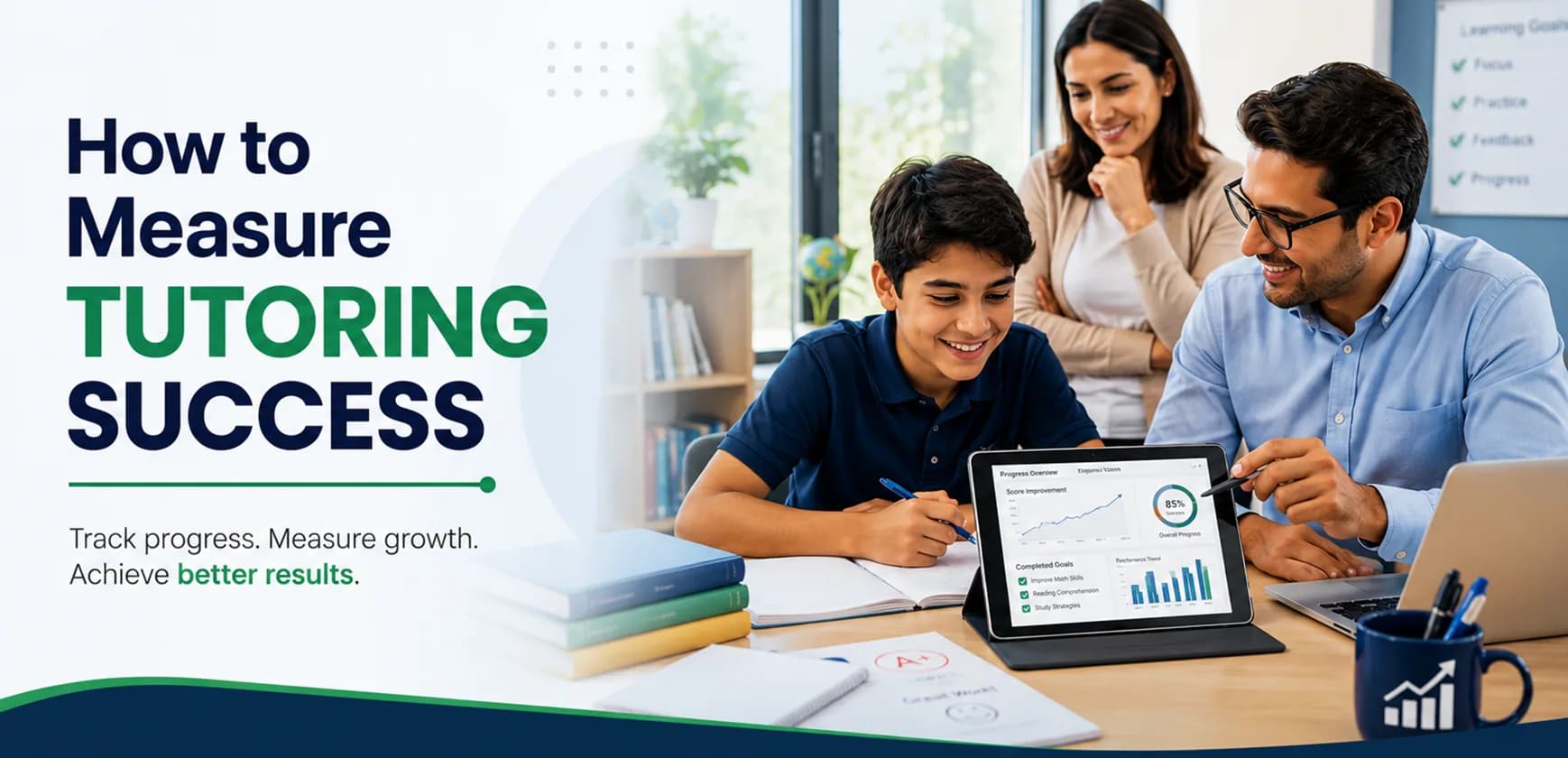
How to Measure Tutoring Success: A Complete Guide for Parents and Students
After choosing the tutoring program, one question naturally comes to mind: "Is it actually working?" Tutoring success is measured by improvements in grades, confidence, study habits, problem-solving skills, classroom participation, and overall academic growth. A great tutor helps students build confidence, improve learning habits, and develop skills along with better grades. Sometimes, these improvements appear before report cards show any noticeable change.
In this guide, we'll explain how to measure tutoring success, what signs parents should watch for, and how to know whether tutoring is helping your child reach their full potential.
Not sure if tutoring is the right choice? Read our guide on Signs Your Child Needs a Tutor.
Why Measuring Tutoring Success Matters
Tutoring is an investment in your child's education and future. Knowing whether it's working helps parents make informed decisions and ensures students continue receiving the support they need.
Measuring tutoring success allows you to:
Understand your child's academic progress
Identify areas that still need improvement
Keep students motivated
Strengthen communication between parents, tutors, and students
Make sure tutoring goals stay on track
Without measuring progress, it's difficult to know if tutoring methods should be adjusted or continued. Before measuring tutoring success, choose the right learning approach by reading our Small Group Tutoring vs. Private Tutoring guide.
Set Clear Learning Goals Before Tutoring Begins
Before you can measure success, you need to know what success looks like.
Every student has different challenges. Some struggle with math concepts, while others need help improving reading comprehension, preparing for standardized tests, or building confidence.
Good tutoring starts by setting realistic goals such as:
Improving test scores
Understanding difficult subjects
Completing homework independently
Increasing classroom participation
Preparing for SAT or other exams
Building better study habits
Reducing test anxiety
When goals are clear, it becomes much easier to measure progress over time.
Now that you know what tutoring success looks like, let's explore the practical strategies you can use to measure the success of your child's tutoring.
Track Academic Performance Over Time
Academic improvement usually happens gradually rather than overnight. Instead of comparing one test to another, track performance across several weeks or months.
You can monitor:
Quiz scores
Homework grades
Assignment completion
Classroom participation
Overall subject performance
Semester report cards
Even small improvements show that tutoring is moving in the right direction.
Choosing the right tutor is the first step toward success. Explore the Questions to Ask Before Hiring a Tutor to make the right decision.
Look Beyond Grades
Grades are important, but they don't always tell the whole story.
Sometimes students begin understanding concepts much better long before their report cards improve. School grading systems may also include attendance, class participation, or projects that don't fully reflect tutoring progress.
So, instead of focusing only on grades, pay attention to overall academic growth. Ask questions like:
Does my child understand lessons more easily?
Are homework sessions becoming less stressful?
Is my child asking better questions?
Do they seem more interested in learning?
These signs often show tutoring is making a real difference.
Watch for Increased Confidence
Confidence is one of the biggest indicators of successful tutoring. Students who once avoided difficult subjects often become more willing to participate in class and solve problems independently.
Some signs of growing confidence include:
Raising their hand during class
Attempting difficult questions
Speaking positively about school
Feeling less nervous before exams
Becoming more independent during homework
Confidence often creates a positive cycle. Students perform better because they believe they can succeed.
Monitor Improvement in Study Habits
Successful tutoring teaches students how to learn, not just what to learn. Over time, students should develop stronger study routines that help them succeed independently.
Look for improvements such as:
Better time management
Organized notes
Consistent homework completion
Reviewing lessons regularly
Planning ahead for exams
Less procrastination
Strong study habits continue helping students long after tutoring sessions end. If your child struggles to build effective study habits on their own, read our guide on Why Self-Study Fails to learn why structured tutoring often leads to better results.
Evaluate Problem-Solving Skills
One goal of tutoring is helping students think independently instead of relying on memorization.
A successful tutoring program encourages students to analyze problems, apply concepts, and explain their thinking.
Watch whether your child:
Solves problems without constant help
Explains answers clearly
Uses different strategies
Learns from mistakes
Thinks critically instead of guessing
These skills are valuable in every subject.
Notice Better Classroom Engagement
Students who understand lessons better usually become more active during school. Teachers often notice positive changes before parents do.
Signs include:
Participating in discussions
Asking thoughtful questions
Paying closer attention
Completing classroom assignments
Working better in group activities
If teachers report increased participation, tutoring is likely making a positive impact.
Ask for Regular Feedback from the Tutor
A good tutor should provide regular updates instead of simply saying, "Everything is going well."
Helpful feedback includes:
Topics mastered
Areas that still need practice
Student strengths
Learning challenges
Homework recommendations
Future learning goals
Regular communication helps everyone stay focused on the student's progress.
Listen to Your Child
Your child is one of the best sources of feedback. Ask open-ended questions after tutoring sessions instead of yes-or-no questions.
For example:
What did you learn today?
Which topic feels easier now?
What are you still finding difficult?
What do you enjoy most during tutoring?
These conversations help parents understand whether tutoring is engaging and effective.
Measure Long-Term Growth
Tutoring success should not only prepare students for the next exam, it should prepare them for future learning.
Long-term success often includes:
Better critical thinking
Improved learning independence
Greater academic confidence
Stronger communication skills
Better organization
Lifelong study habits
These improvements benefit students throughout school, college, and beyond.
Use Practice Tests and Assessments
Regular assessments help measure real progress. Practice quizzes and mock exams can show whether students truly understand the material or simply remember recent lessons.
Assessments help identify:
Weak topics
Strong subjects
Learning gaps
Exam readiness
Areas needing additional review
Tracking assessment results over time provides a clear picture of improvement.
Want to measure your child's academic growth? Join the Nobin Scholars Challenge to track progress with diagnostic and final assessments
Be Patient with the Learning Process
Every child learns at a different pace. Some students show noticeable improvement within a few weeks, while others may need several months before major academic changes become visible.
Avoid comparing your child with classmates or siblings. Instead, focus on personal growth and consistent progress. Small improvements often lead to significant long-term success.
Common Signs That Tutoring Is Working
If you're wondering whether tutoring is effective, here are some encouraging signs to look for.
Your child enjoys learning more.
Homework takes less time.
Confidence continues to grow.
Test scores gradually improve.
School-related stress decreases.
Teachers notice positive changes.
Study habits become more organized.
Independent learning increases.
Difficult subjects become easier.
Academic goals are being achieved.
The more of these signs you notice, the more likely your child is benefiting from tutoring.
How Parents Can Support Tutoring Success
Parents play an important role in helping tutoring become successful. When parents and tutors work together, students receive stronger support and often achieve better results.
Simple ways to help include:
Encourage regular attendance.
Create a quiet study space.
Celebrate small achievements.
Communicate with the tutor.
Stay involved without adding pressure.
Help maintain consistent study routines.
Encourage curiosity and questions.
The right tutoring program can make a big difference in your child's progress. Learn how to choose one in our How to Choose the Right Tutoring Program for Your Child.
Help Your Child Succeed with Nobin
Finding the right tutor is one of the most important steps toward academic success, and that's where Nobin can help. At Nobin, students can connect with experienced tutors who provide personalized learning based on each student's strengths, challenges, and academic goals.
Whether your child needs help with school subjects, exam preparation, or building stronger study habits, Nobin offers flexible online tutoring designed to make learning easier and more enjoyable.
With customized learning plans, expert guidance, and regular progress tracking, Nobin helps students build confidence, improve performance, and achieve long-term academic success.
Conclusion
Measuring tutoring success is about much more than looking at report cards. Real progress includes stronger confidence, better study habits, improved problem-solving skills, increased classroom participation, and a positive attitude toward learning.
Every student's journey is different, and meaningful improvement often happens gradually. By setting clear goals, tracking progress over time, communicating with tutors, and supporting your child at home, you can see the true value of tutoring. Remember, the ultimate goal isn't just better grades, it's helping your child become a confident, independent learner who is prepared for future success.