

Parents often have questions like whether small-group tutoring or private tutoring is the better choice, how long their child should study, and which course is the right fit. The biggest problem is that they always seem confused about small-group tutoring and private tutoring.
Every parent wants their child to do well in school, feel confident, and enjoy learning. The truth is, the right tutoring option isn't the same for every child. It depends on how they learn, what they need help with, and their academic goals.
In this guide, we'll compare small-group tutoring vs. private tutoring, explain the benefits of each, and help you decide which option is the best fit for your child.
What Is Small Group Tutoring?
Small group tutoring involves a tutor teaching a small number of students at the same time. Usually, there are between 3 and 8 students in one session, and they are often at similar grade levels or preparing for the same exam.
This format has its own unique perks that some kids genuinely thrive on.
Students get to learn alongside peers, which can feel less intimidating for some kids.
It's usually more affordable than one-on-one sessions.
Group discussion can help reinforce concepts through peer explanations.
Even though it's a group setting, tutors still provide individual attention whenever needed.
What Is Private Tutoring?
Private tutoring is one-on-one instruction where a tutor focuses entirely on a single student. Every lesson is customized based on the student's strengths, weaknesses, learning pace, and academic goals.
Since the tutor's full attention is on one learner, lessons can move faster or slower depending on what the student needs.
Small Group Tutoring vs Private Tutoring: The Main Differences
Although both tutoring options aim to improve learning, they work in different ways. Understanding these differences makes it easier to choose the right one.
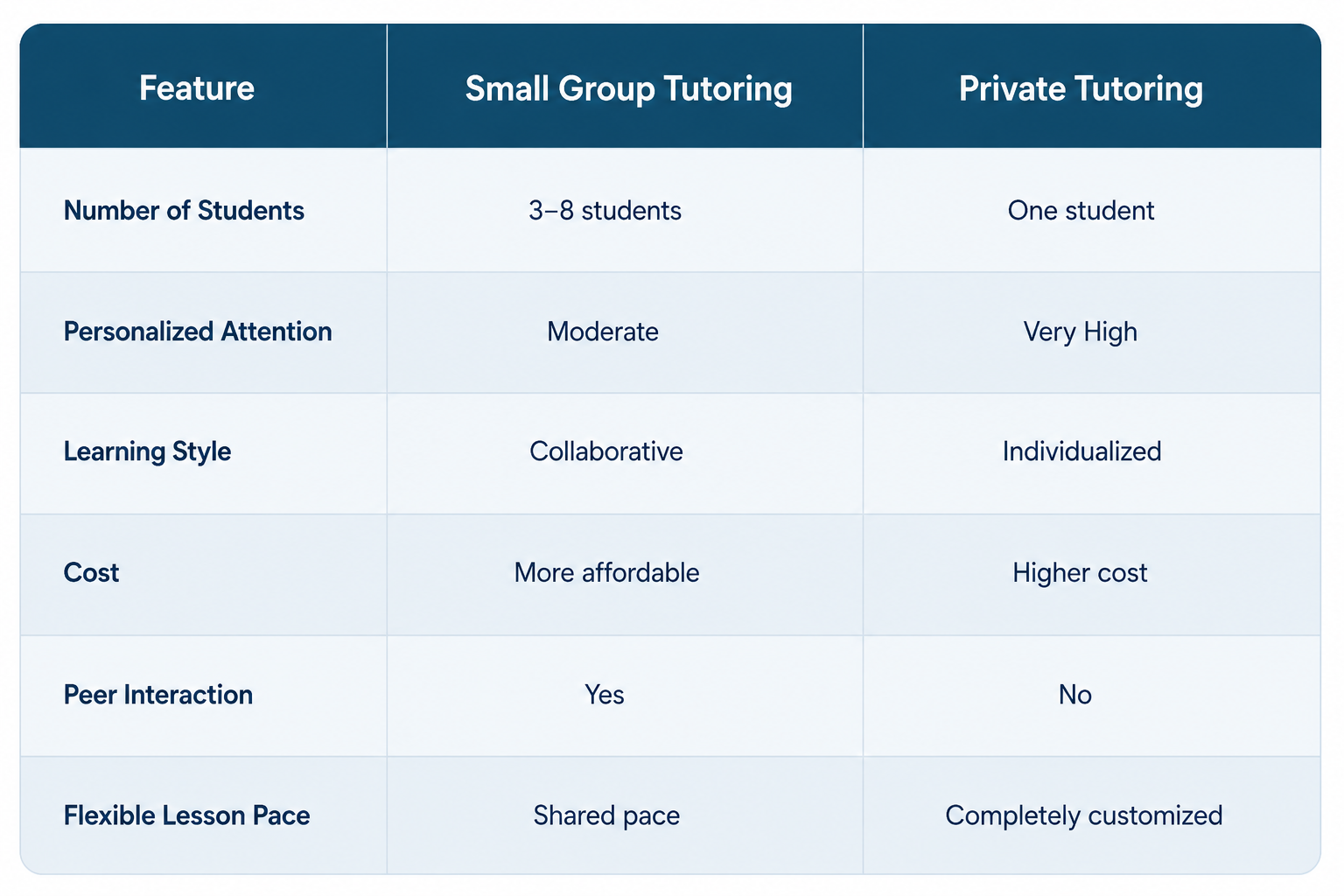
If you're still unsure whether tutoring is the right step, it's worth learning about the signs your child needs a tutor before making a decision. This can help you identify early learning gaps and choose the support that best fits your child's needs.
Benefits of Small Group Tutoring
Small group tutoring offers much more than just academic support. Many students enjoy learning with others because it feels less stressful and more engaging.
Some of the biggest benefits include:
1. Encourages Active Learning
Students participate in discussions, ask questions, and learn from different perspectives. Hearing classmates explain ideas can often make difficult topics easier to understand.
2. Builds Confidence
Many children become more comfortable speaking up when they realize other students have similar questions. This helps reduce fear and increases classroom confidence.
3. Develops Communication Skills
Group activities encourage teamwork, listening, and respectful discussion. These are valuable life skills that extend beyond academics.
4. Keeps Students Motivated
Learning alongside peers often creates healthy motivation. Students are inspired to stay focused and keep improving when they see others working hard.
5. More Budget-Friendly
Since several students share one tutor, small group tutoring usually costs less than private tutoring while still providing quality instruction.
Small group tutoring is even more effective when students are placed in grade-based courses, where they learn with peers at a similar academic level and follow a curriculum designed for their grade.
Benefits of Private Tutoring
Private tutoring provides highly personalized support that can make a significant difference for students who need extra attention.
Here are some major advantages.
1. Personalized Learning
Every lesson is designed around your child's needs. Tutors can spend more time on difficult topics and skip concepts the student already understands.
2. Faster Academic Improvement
Without distractions from other students, tutoring sessions focus entirely on one learner, helping them make quicker progress.
3. Flexible Learning Pace
Some children need extra time to understand new concepts, while others learn very quickly. Private tutoring adjusts naturally to either pace.
4. Better Exam Preparation
Students preparing for important exams often benefit from personalized study plans, targeted practice, and detailed feedback.
5. Immediate Feedback
Mistakes are corrected right away, allowing students to understand concepts before moving on to the next lesson.
Private tutoring use proven strategies to help students prepare more effectively and maximize their results.
When Is Small Group Tutoring the Better Choice?
Not sure if small group tutoring is the best fit? A free diagnostic test can help identify your child's strengths, learning gaps, and academic needs before choosing the right tutoring approach.
Small group tutoring may be the right choice if your child:
Enjoys working with classmates
Learns well through discussion
Needs regular academic support
Wants motivation from peers
Is preparing for group-based classroom learning
Benefits from collaborative problem-solving
Needs a more affordable tutoring option
For many students, the social aspect of learning actually improves understanding and makes studying more enjoyable.
When Is Private Tutoring the Better Choice?
Private tutoring is often the better option when a child requires focused academic support or has unique learning needs.
It may be the best fit if your child:
Is struggling significantly in a subject
Needs personalized lesson plans
Is preparing for competitive exams
Gets easily distracted in groups
Has specific learning gaps
Needs flexible scheduling
Learns at a much faster or slower pace than classmates
For students who need intensive support, one-on-one tutoring can produce excellent results.
Which Tutoring Option Improves Grades Faster?
When self study fails, then parents rush for experienced teachers and ask this question before choosing a tutoring program.
While private tutoring can deliver quick results through one-on-one attention and personalized lessons, small group tutoring often provides the perfect balance of individual support and interactive learning. Students stay engaged, ask questions, learn from their peers, and remain motivated throughout the learning process. With experienced tutors and small class sizes, they receive plenty of attention while also benefiting from group discussions and shared problem-solving.
In the end, the fastest improvement comes from consistent learning, quality teaching, and a tutoring environment where your child feels motivated to grow.
How to Choose the Right Tutoring Option for Your Child
Every child learns differently. Instead of asking which tutoring method is generally better, ask which one is better for your own child.
Consider these questions:
Does your child enjoy learning with others?
Do they need individual attention?
Are they preparing for an important exam?
What is your tutoring budget?
Does your child lose confidence easily?
Do they need motivation or personalized instruction?
Answering these questions can help narrow down the best choice. Once you've decided on tutoring, explore these questions to ask before hiring a tutor to find the right match for your child's learning needs.
Now, let’s compare both side:
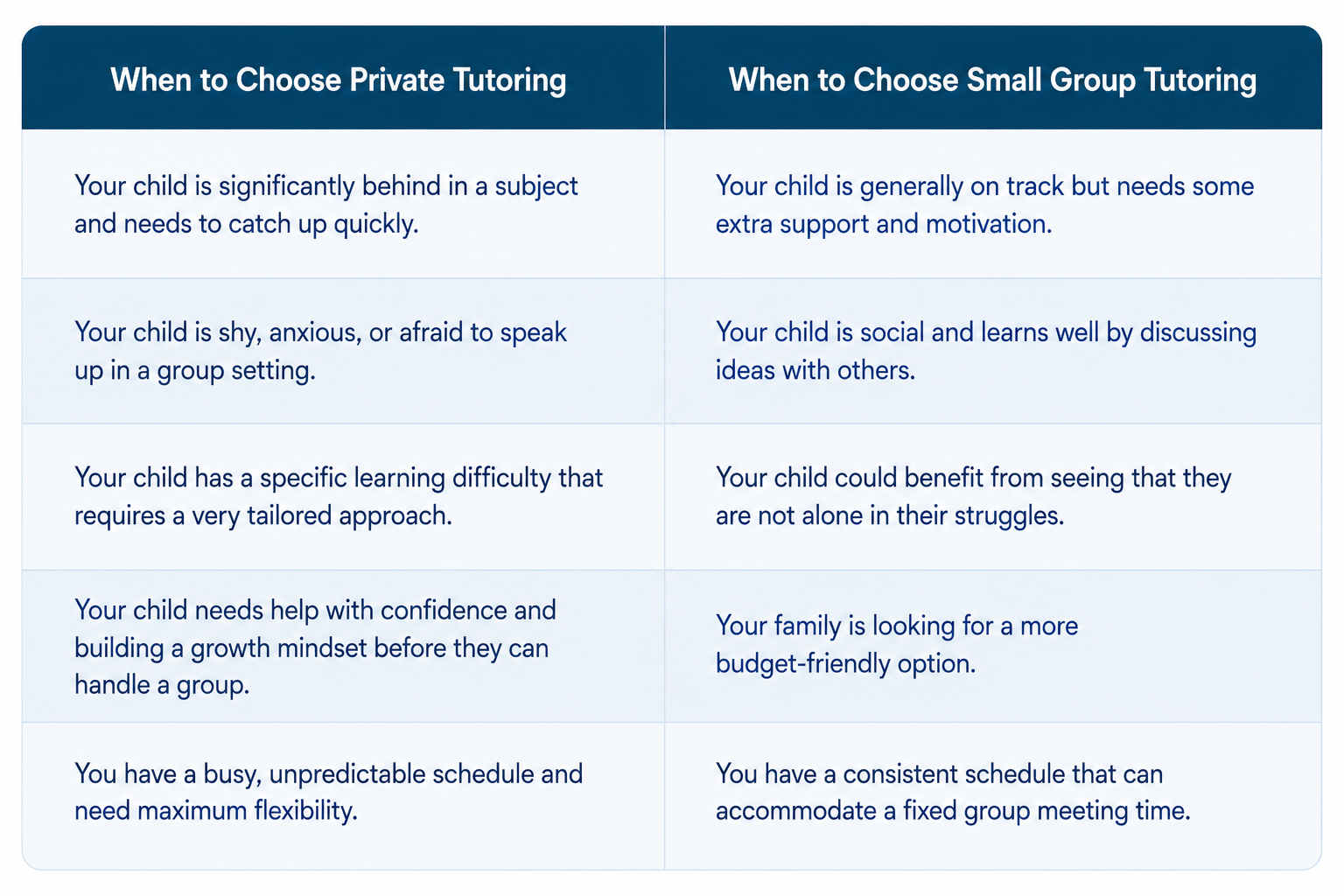
Why Small Group Tutoring Gives You the Best of Both
Although both private tutoring and small group tutoring have their own benefits, small group tutoring offers the best of both worlds. Students receive personalized support from experienced tutors while also learning with classmates, asking questions, sharing ideas, and staying motivated together.
This approach not only helps improve grades but also develops communication, teamwork, and problem-solving skills that benefit students beyond the classroom.
Can Your Child Switch Between Both?
Absolutely. Many students benefit from combining both tutoring styles during different stages of their academic journey. This flexible approach allows students to enjoy the advantages of both learning methods.
For example:
Join small group tutoring during the school year for consistent learning.
Switch to private tutoring before important exams.
Use group sessions for concept building.
Use private sessions for difficult subjects.
If you're still deciding, our guide on how to choose the right tutoring program for your child can help you compare your options and make a confident decision for your child's academic success.
Common Myths About Tutoring
Many parents hesitate because of misconceptions about tutoring. Let's clear up a few common myths.
Myth 1: Private Tutoring Is Always Better
Not necessarily. Some children perform better when they learn with peers and participate in group discussions.
Myth 2: Small Group Tutoring Means Less Learning
A well-organized small group still provides quality instruction while encouraging collaboration and active participation.
Myth 3: Tutoring Is Only for Weak Students
Tutoring benefits students at every academic level. High-achieving students also use tutoring to prepare for competitive exams, strengthen skills, and stay ahead.
Myth 4: Tutoring Replaces School
Tutoring is meant to support classroom learning, not replace it. It reinforces concepts, fills learning gaps, and builds confidence.
Help Your Child Learn Smarter with Nobin
Whether your child needs personalized tutoring, SAT exam preparation, or structured academic support, Nobin helps families with qualified tutors.
At Nobin, our small group classes are designed to give every student the attention they need without missing out on the benefits of collaborative learning. With small class sizes, interactive lessons, and grade-based groups, students build confidence, strengthen their understanding, and achieve better academic results in a supportive environment.
Visit Nobin to explore grade-based courses, SAT & SHSAT courses, personalized small group tutoring, book experienced tutors, and help your child achieve their full academic potential.
Conclusion
Both small group tutoring and private tutoring have unique advantages. Neither option is automatically better than the other because every child has different learning needs.
If your child enjoys collaboration, motivation from peers, and affordable learning, small group tutoring may be the perfect choice. If they need personalized attention, flexible lessons, or intensive academic support, private tutoring may deliver better results.
The best tutoring program is the one that matches your child's personality, goals, and learning style. When students receive the right support, they gain more than better grades—they build confidence, stronger study habits, and a lifelong love for learning.